
Can We Get 300HP Out Of A STOCK 7.3L?!
If you've ever driven a completely stock 7.3L Powerstroke, you know they aren't exactly known for being quick. Compared to today's diesel trucks, the old 7.3L can feel pretty sluggish. That's not necessarily a bad thing—these trucks were built to work—but it leaves plenty of room for improvement.
We've already put together some pretty serious 7.3L builds, including our 410 HP OBS 7.3L towing build. This time, though, we wanted to keep things much simpler.
The question was pretty straightforward: How much power can we make with a completely stock 7.3L long block and factory injectors?
Cameron Lewis from our team teamed up with his buddy Ben Hess to find out. We started with an old-school OBS Ford pickup, a bone-stock engine, and one major goal: get as close to 300 horsepower as possible without opening up the engine.
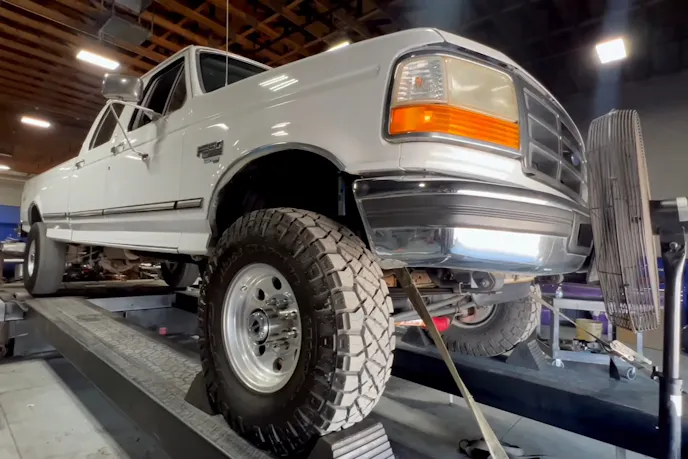
Finding Our True Baseline
Before we started throwing parts at the truck, we needed to know exactly where we were starting.
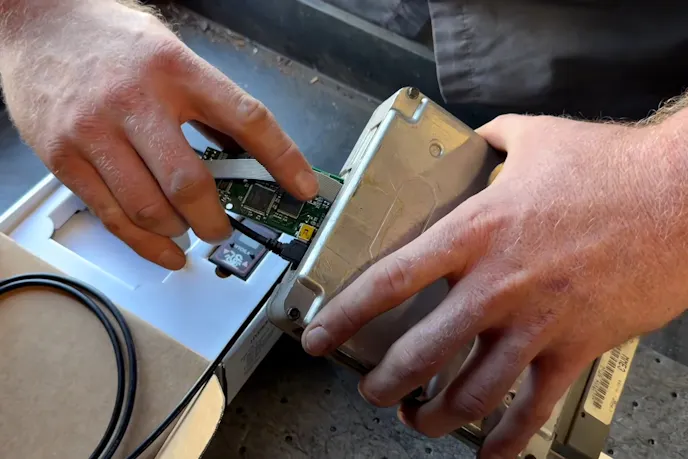
Ben originally thought the truck still had the factory calibration. Once we pulled the PCM out of the fender well, we found a Banks Big Hoss module attached to it. So, before doing anything else, we installed a Hydra tuner and set it to the factory calibration.
That gave us a much better idea of what the truck could actually do in stock form.
The difference was noticeable right away. Ben summed it up pretty well: "I do feel the difference. This is not as fun."
That's probably the best way to describe a completely stock 7.3L. It gets the job done, but you have to work the throttle pretty hard to get this heavy OBS moving.
Getting the Factory Turbo Out
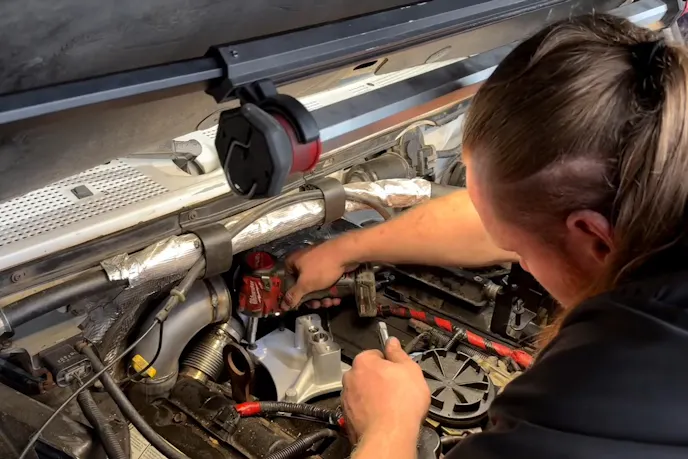
Next up was the part nobody was particularly excited about: removing the factory turbo.
The turbo removal ended up taking around four hours, and the age of the truck certainly didn't make things easier. Rusted hardware on the factory exhaust flange fought us every step of the way. We ended up breaking bolts and using an air hammer to split a seized nut just to get everything apart.
That's one of the realities of working on these trucks. They're getting close to 30 years old, and plenty of them have spent their entire lives working hard.
As Cameron put it during the install, "As you guys saw, this is frustrating. Working on an OBS is tough. These trucks are like 30 years old."
On top of the rusty hardware, worn cab mounts and sagging engine mounts made getting the exhaust lined up more difficult than it should have been.
We eventually figured out the easiest way to get everything together: bolt the driver-side exhaust pipe in place first, then tighten down the passenger-side collector. Sometimes the best solution is simply figuring out what order the parts actually want to go together in.
Time To Hit The Dyno
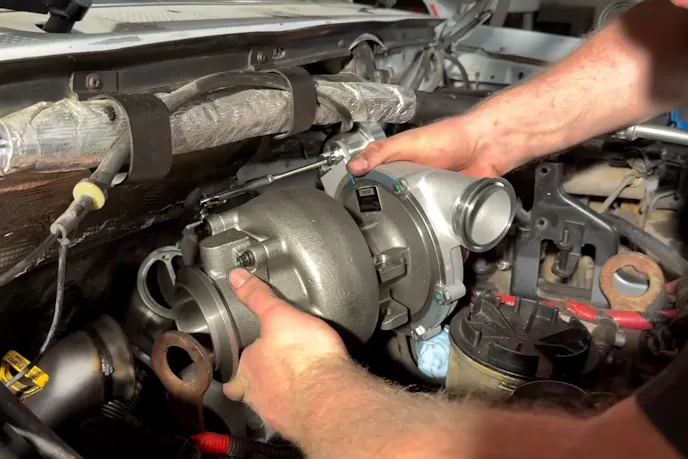
Once we had the factory turbo out of the way, we installed one of our Gen 3 KC300X conversion kits.
The Gen 3 setup replaces the restrictive factory turbo mounting flange and gives us a much better foundation for making power. It also makes future turbo service and upgrades considerably easier.
Before putting the truck on the dyno, we removed the aftermarket air filter to make sure the intake wasn't creating an unnecessary restriction. Then we strapped the truck down and made some pulls.
And that's where things got interesting.
With the factory 7.3L injectors still in the truck, the engine made an impressive 284 horsepower.
For a nearly 30-year-old engine with stock injectors and a stock bottom end, that's a pretty solid number.
So, Can A Stock 7.3L Make 300 HP?
We didn't quite crack the 300 HP mark on this particular setup, but getting to 284 HP showed us exactly what we were looking for.
The factory 7.3L isn't necessarily short on potential. It's short on airflow.
Replacing the restrictive factory turbo with a modern turbo capable of moving substantially more air completely changed the way the truck drove and allowed the stock injectors to make considerably more power than you might expect.
And that's really what this test was about. We wanted to see how much the factory fueling could actually support if we gave it the airflow it needed.
The answer?
A lot more than we expected.
Of course, we're not stopping at 284 HP.
The next step is to add larger injectors and an upgraded high-pressure oil pump and see just how far we can push this setup. The goal is 450 HP, and we're looking forward to finding out what this old 7.3L can really do.